Surfaces at Albertz Benda
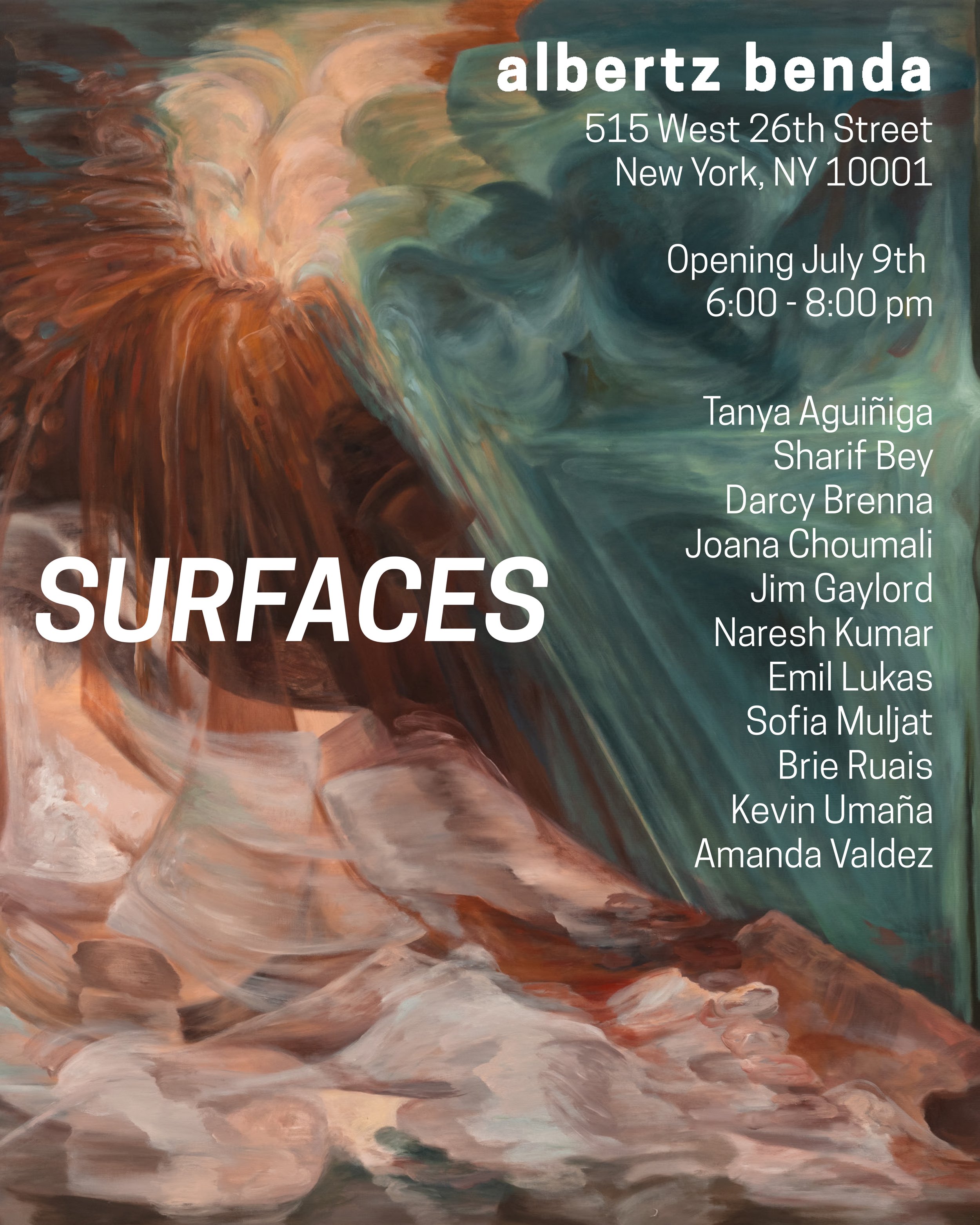
Surfaces at Albertz Benda, New York City
July 9 - August 7th, 2026
Opening reception: July 9th 6 - 8 pm
New York, NY | albertz benda is pleased to present Surfaces, a group exhibition featuring eleven artists working across painting and sculpture: Tanya Aguiñiga, Sharif Bey, Darcy Brenna, Joana Choumali, Jim Gaylord, Naresh Kumar, Emil Lukas, Sofía Muljat, Brie Ruais, Kevin Umaña, and Amanda Valdez.
Each artist treats the surface not as a neutral support, but as the primary site of meaning: where process is made legible and the act of making becomes inseparable from the thing made. For some, the surface contains a record of lived experience. In Brie Ruais's work, each sculpture begins with an amount of clay equal to the artist's body weight, which she shapes through movement: spreading, pushing, tearing open, scraping away. The forms that emerge register her presence while calling to mind topographical maps, tracing the relationship between interior and exterior worlds.
Darcy Brenna paints with an animated urgency, incorporating up to twenty layers of expressive, visceral brushstrokes propelled by instinct and somatic memory. Working at a large scale that allows her whole body to enter the canvas, the process serves as a form of physical and emotional catharsis. Incorporating collage, photomontage, embroidery, and quilting, Joana Choumali layers photographs taken during early morning walks with needlework, sheer fabrics, and touches of gold paint. The process merges the immediacy of digital photography with the meditative labor of embroidery, grounding Choumali in her surroundings.
Kevin Umaña's hybrid clay-and-canvas paintings function as mnemonic devices, their colors and patterns drawn from his own memories: a meal shared with a mentor, a morning spent in nature,or the handwoven textiles of the Pipil, the Indigenous people of western and central El Salvador where his family is from. Others in the show use material to challenge how an image is read. Emil Lukas stretches thousands of threads across a concave frame, layering line upon line until an atmospheric composition emerges from their overlap. Nothing is painted; color and form arrive entirely through density and the way the threads catch the light, so that the picture shifts as the viewer moves around it.
Jim Gaylord manipulates heavy watercolor paper through processes of addition and removal - cutting, bending, and scraping - to create multidimensional surfaces. Working primarily in monochrome, he focuses on effects of light and shadow cast upon raised edges, volumetric forms, and surface textures. Through this formal exploration, Gaylord seeks out a sense of harmony and rightness among shapes that appear otherwise idiosyncratic. Sofía Muljat begins each painting with a reference image anchored in classical pictorial traditions, which she then obscures under veils of lyrical brushwork. The result feels vaguely familiar but just out of reach - her surfaces hold the tension between order and dissolution, applying and releasing visual pressure until a delicate, tenuous harmony emerges. Meaning lives not in legibility but in intuition, and in the universal emotional register that lies just beneath it.
For a third group, materials arrive already charged with collective histories. Naresh Kumar draws with indigo, marble dust, and copper dust onto the pages of old telephone directories, layering image over columns of names; individual lives are subsumed into materials freighted with the larger histories of labor, trade, and power that shaped them. Tanya Aguiñiga chooses materials that carry cultural significance. Weaving with cochineal-dyed cotton rope - a dyeing technique indigenous to Mexico - and heckled flax, she conjures a monumental femme body united by a winding assemblage of fiber and matter: a map of senses and memories both ancestral and temporal.
In his Proud Pawn series, Sharif Bey reimagines the chess pawn as a symbol of dignity, pride, and latent power within systems of hierarchy. Through references to ancient iconography, Black Masking Indian traditions, and Afrofuturism, the works transform a seemingly expendable figure into one of resilience and consequence. His choice of material reinforces this: nails and metal shards embedded in the ceramic invoke nkisi nkondi, the power figures of the Kongo peoples of Central Africa. Amanda Valdez cuts raw canvas, the quintessential support of Western painting, and sews it back together with dyed fabric, oil stick, and thread, invoking the entangled histories of painting and craft and their implication in questions of gender, race, and power. Throughout, texture becomes a mode of conveying knowledge; meaning is communicated not through text or figuration but through surface and material.
ABOUT ALBERTZ BENDA Founded in 2015, albertz benda is a contemporary art gallery with an international program exploring material and textuality as well as cultural and social dialogues. Our Chelsea space is host to rotating exhibitions with an emphasis on solo presentations of emerging artists, new research into historical figures, and thematic group exhibitions. In 2021, the gallery expanded to a second location in Los Angeles. Featuring an evolving identity separate from our New York program, the LA space is realized within the context of a domestic setting, advancing new connections between visual arts, craft, and design.
Media Contacts: Rachel Tretter / rachel@albertzbenda.com
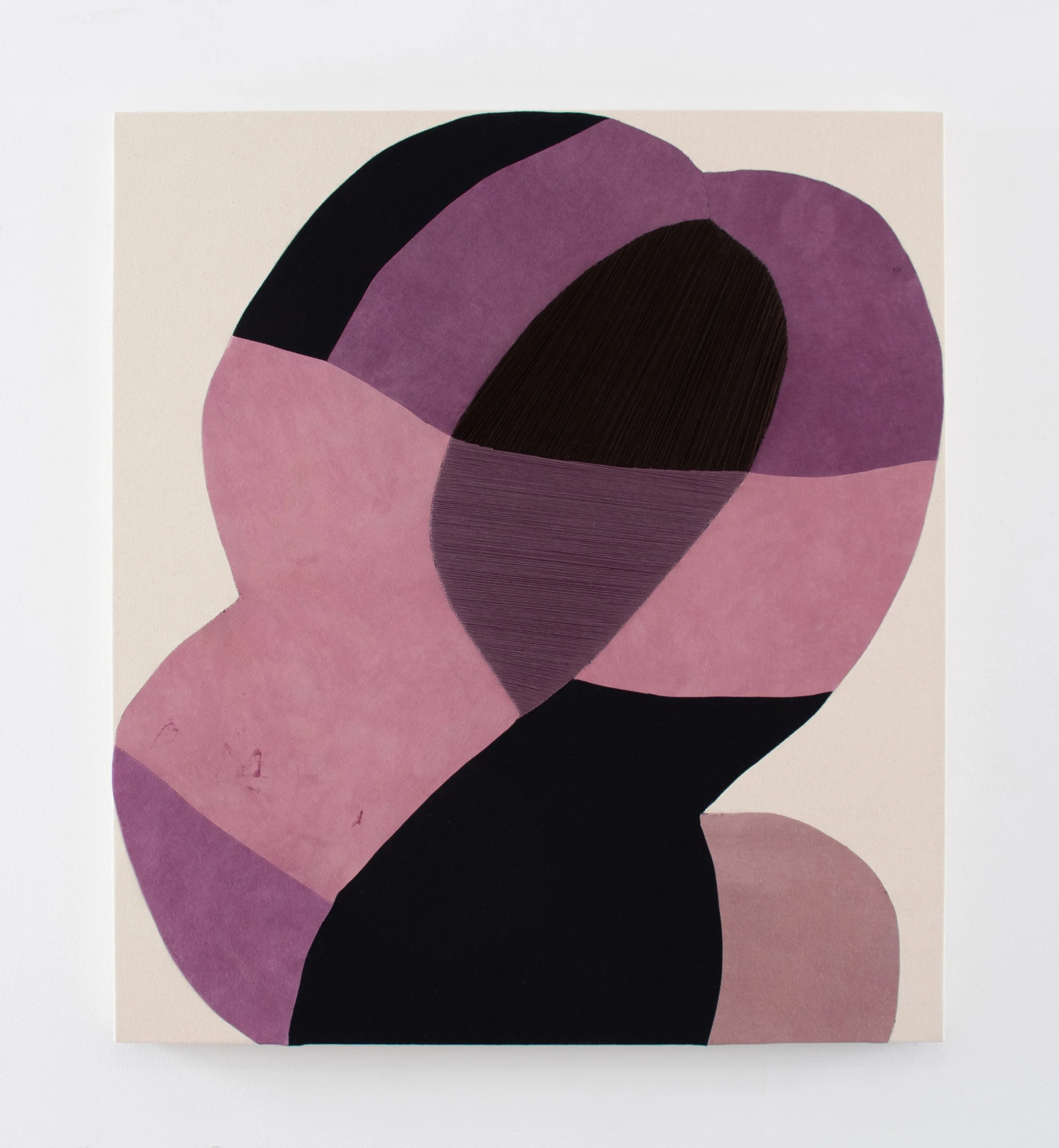
Shortly Forever, 2026 Embroidery, hand-dyed fabric, fabric, and canvas, 36 × 32 inches